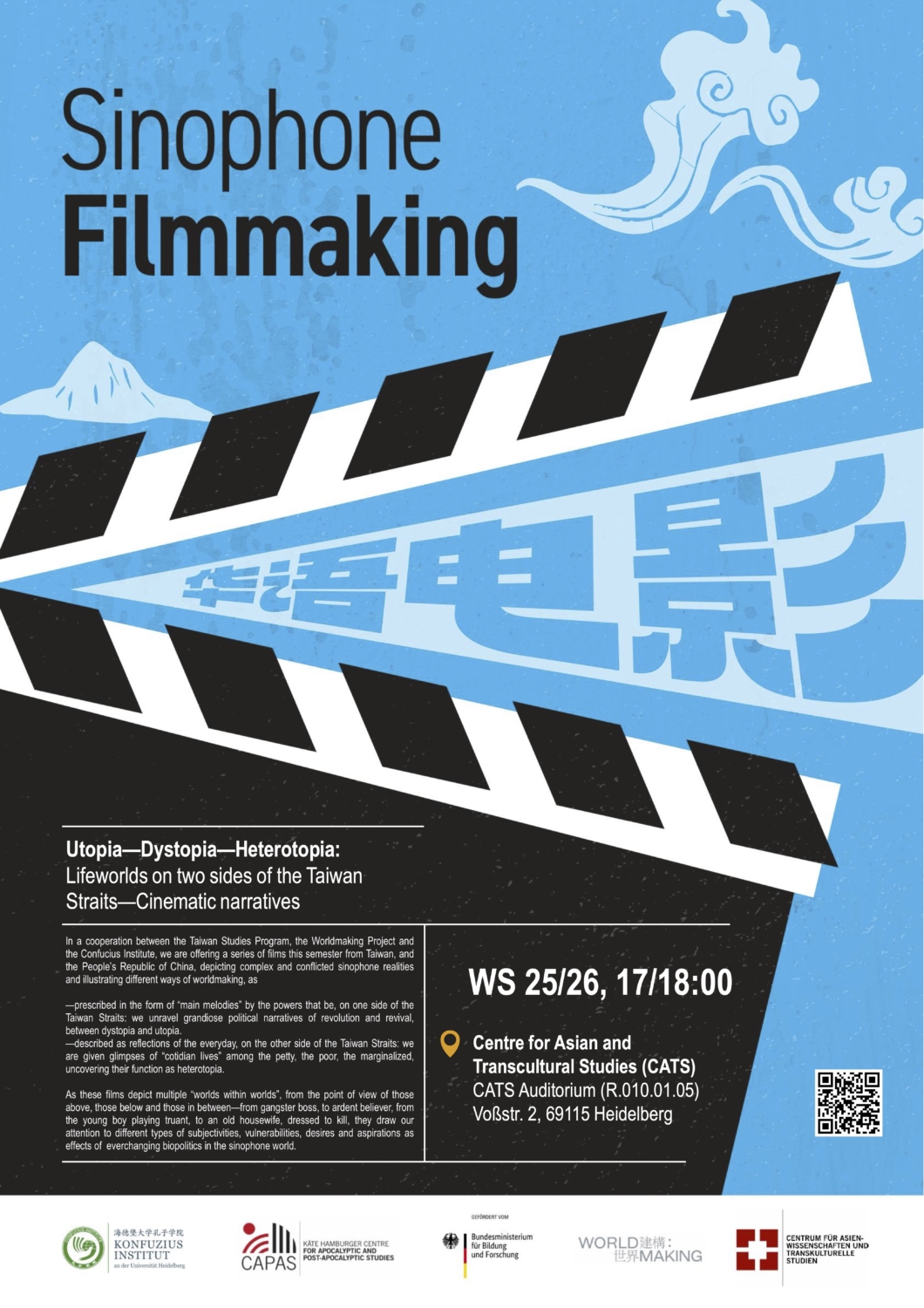
Internationale Wochen gegen Rassismus: Rassismus verstehen – Solidarität stärken

Heidelberg stellt im März wieder das Miteinander in den Mittelpunkt. Unter dem Motto „100 Prozent Menschenwürde. Zusammen gegen Rassismus und Rechtsextremismus“ finden vom 11. bis 29. März 2026 die „Internationalen Wochen gegen Rassismus” statt. Mehr als 60 Initiativen, Vereine, Institutionen und engagierte Gruppen beteiligen sich in diesem Jahr an dem vielfältigen Programm. Koordiniert werden die Aktionswochen vom Interkulturellen Zentrum Heidelberg.

Rassismus verstehen – Solidarität stärken

Vertreter:innen verschiedener Communities berichten von ihren persönlichen Erfahrungen mit Rassismus und Diskriminierung in unserer Gesellschaft. Sie zeigen, wie unterschiedlich – und zugleich ähnlich – rassistische Erfahrungen sein können. In der moderierten Podiumsdiskussion werden Formen von Alltagsrassismus sichtbar gemacht und die dahinterliegenden strukturellen Mechanismen thematisiert. Im Anschluss ist das Publikum eingeladen, Fragen zu stellen und gemeinsam ins Gespräch zu kommen.

Moderation: Sophie Kara

Sprecher:innen: Wynonna Nixel, Katya Lwanga, Francesco Arman

Gefördert durch: Amadeu Antonio Stiftung

Call for Papers CATS-SJTU International Graduate Student Conference “Memory—Between Experience, Culture, and Transculturality”

Call for Papers

CATS-SJTU International Graduate Student Conference

Memory—Between Experience, Culture, and Transculturality

Memory has become one of the central categories through which the humanities interrogate the past, the self, and the conditions of historical knowledge. Far from being a mere repository of bygone events, memory unfolds at the intersection of experience, narration, embodiment, and cultural transmission. This conference invites graduate students from across the humanities to explore memory as a dynamic and contested field—one in which individual recollection, communicative exchange, and culturally sedimented forms of remembrance are in constant dialogue.

Drawing on theories of cultural memory, this CfP encourages reflections on how societies stabilize, ritualize, and transform images of the past through texts, images, practices, and institutions, while also attending to communicative memory as it circulates in everyday interactions and lived social relations. Equally central is the notion of collective memory, which foregrounds the ways in which remembering is never purely private but shaped by social frameworks, power relations, and shared imaginaries. What are the functions of different dimensions of memory, how should its media (such as writing, images, or monuments) be evaluated, and what forms of dealing with stored knowledge exist that attach growing importance not only to history, politics, and science, but also to art? In an increasingly interconnected world, different dimensions of memory further cannot always be adequately understood without addressing questions of transculturality: the movement of memories across borders, languages, and historical contexts, as well as the frictions and creative reconfigurations that arise from such encounters.

We invite contributions that approach memory from philosophical, literary, historical, anthropological, cultural-theoretical, or related perspectives. Possible lines of inquiry include, but are not limited to:

  • The nature of memory and its epistemic status: what kind of knowledge does memory produce, and how does it differ from other forms of knowing (i.e. perceptual, testimonial, archival etc.)?
  • Memory and truth: can memory be considered a reliable access to the past, or is it constitutively marked by distortion, selection, and narrative reconstruction?
  • The role of memory in shaping subjectivity: how do practices of remembering inform personal identity, self-understanding, and affective orientation in the world?
  • Remembering and forgetting: how are acts of forgetting structurally intertwined with memory, and to what extent is forgetting a precondition of historicity and meaning-making?
  • Memory and embodiment: in what ways is the past lived on through the body, sensory experience, and habitual practices, and how does embodied memory challenge purely cognitive models of recollection?
  • Collective memory: how is the collective memory distinct from aggregated individual memories? Does the rise of digital media and global communication accelerate or fragment collective memory?
  • Transcultural memories: how do memories travel between cultures, and how are they translated, contested, or transformed in new social and historical settings?

We particularly welcome interdisciplinary and comparative approaches that open new perspectives on memory beyond national or disciplinary boundaries.


Submission Guidelines
Graduate students and young professionals from both universities are invited to submit abstracts of 500 words (including 3-5 keywords) on topics related to the conference theme no later than March 15th, 2026 to Mr, KAN Peilin: international-hum@sjtu.edu.cn. Please include your name, institutional affiliation, and a short biographical note (150 words). Decisions of acceptance will be announced by April 15th, 2026. The conference will be held in English. It will take place in in Heidelberg.

To recognize the most outstanding paper presented at the conference, the conference committee will nominate the “Sheng Sheng 生生 Best Student Paper Award.” To be eligible for the award, the full paper needs be submitted by May 31st, 2026 to the same email address. The award comprises an honorarium of 3,000 RMB (appr. 400 Euro).

Information for students from SJTU:

The costs for the international travel as well as hotel costs in Heidelberg for the duration of the conference will be covered. If your contribution to the conference is accepted, your participation is binding and cannot be withdrawn. For further inquiries, please contact Dr. Petra Thiel.

Breaking Bad-Style Crimes in China

Both the American TV series “Breaking Bad” and the real Chinese criminal case of Zhengbo Zhang feature a key scenario: professionals using their chemistry expertise to manufacture and sell controlled psychotropic substances. This presentation explores four critical issues:

1. Should controlled psychotropic medications automatically be classified the same as illegal drugs?

2. How should we legally classify the abuse of new psychotropic substances that aren’t yet on controlled substance lists?

3. When it comes to new drug precursors, how do we address criminals who evade regulations by slightly modifying the chemical structure of controlled substances to create unregulated substances?

4. How can we address the clinical needs of Chinese patients who require access to foreign-approved medications containing controlled psychotropic substances?

Ostasien Aktuell – Bridging Worlds: How Civil Society Moves India & China Forward

The talk will introduce the vibrant civil society in India and China by looking on their individual achievements and challenges. Ms Rentke will illustrate her analysis with real-live examples from grassroot initiatives in areas like community development, climate change and social inclusion and give insights about her working experience in India and China. Thus, the public talk will provide opportunities for students to learn about possible career paths, depending on the specific disciplinary backgrounds, too. Everyone is welcome!

Ostasien Aktuell – Between Brussels, Washington and Beijing: Italy’s China policy in a changing international landscape

n March 2019, during Xi Jinping’s visit to Rome, Italy joined the Belt and Road Initiative (BRI) by signing an ad-hoc Memorandum of Understanding (MoU) with China. Less than five years later, in December 2023, the current Italian government announced the termination of the MoU, thus bringing the country out of the BRI. This decision did not mark a major discontinuity in Italy’s China policy, though, as Rome continued to invest on its relationship with Beijing. Most notably, this was demonstrated in 2024, when Italy’s Prime Minister Giorgia Meloni and President Sergio Mattarella visited China few months one after the other. What explains the apparently contradictory trajectory of Italy’s China policy? What are the constraints posed on subsequent Italian governments by a changing international landscape? And, more specifically, how is Rome coping with the growing USChina rivalry and with an increasingly tense EU-China relationship?

Sinophone Filmmaking: 现成品 (ReadyMade, 2009) , 78 mins.

Mao Zedong died in 1976, but his impersonators are alive and well. This film documents the lives of two people who resemble Mao and assume Mao roles. Peng Tian is a villager from Mao’s home province of Hunan who walks into the Beijing Film Academy one day in full Mao dress to study film acting. Chen Yan is a housewife from Sichuan province, whose mother realized she looked like Mao. The documentary was directed by Zhang Bingjian.

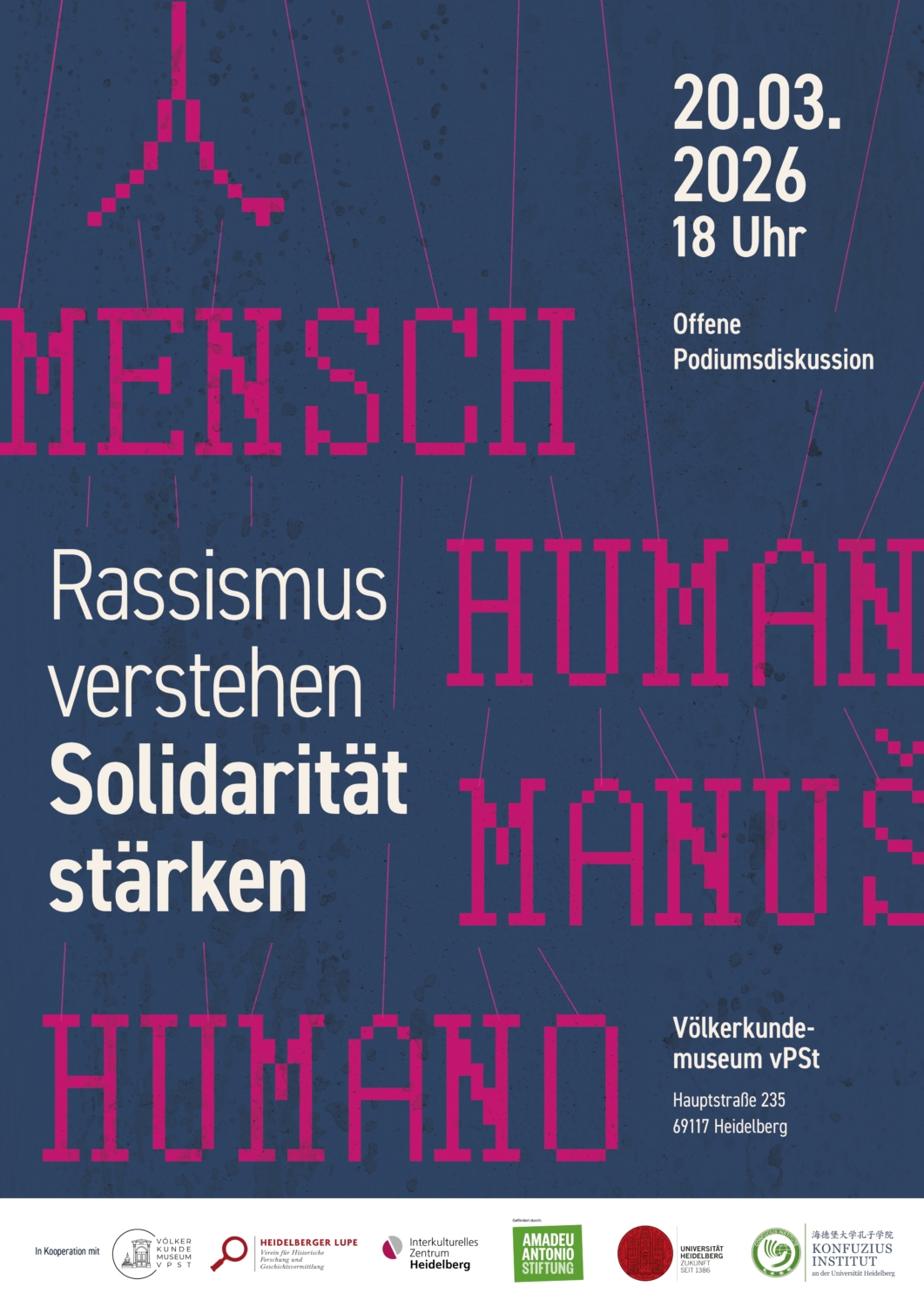
Lifeworlds on two sides of the Taiwan Straits—Cinematic narratives 

In a cooperation between the Taiwan Studies Program, the Worldmaking Project and the Center for Asian and Transcultural Studies (CATS), we are offering a series of films this semester from Taiwan, and the People’s Republic of China, depicting complex and conflicted sinophone realities and illustrating different ways of worldmaking, as

—prescribed in the form of “main melodies” by the powers that be, on one side of the Taiwan Straits: we unravel grandiose political narratives of revolution and revival, between dystopia and utopia.  

—described as reflections of the everyday, on the other side of the Taiwan Straits: we are given glimpses of “cotidian lives” among the petty, the poor, the marginalized, uncovering their function as heterotopia.  

As these films depict multiple “worlds within worlds”, from the point of view of those above, those below and those in between—from gangster boss, to ardent believer, from the young boy playing truant, to an old housewife, dressed to kill, they draw our attention to different types of subjectivities, vulnerabilities, desires and aspirations as effects of  everchanging biopolitics in the sinophone world. 

Film Schedule

Venue: CATS Auditorium

EatDrink, Man, Woman is a comedy-drama directed by Ang Lee 李安. The film uses food as a metaphor for family, tradition, and change, capturing unspoken tensions between generations.

Venue: CATS Auditorium

Directed by  Huang Jianxin et. al., this film shows how China, marked by political disunity embarks on a new rode lead by a handful of individuals, including Mao Zedong, Li Dazhao and Zhou Enlai, who, following the 1911 Revolution, envision a unified nation, and found a Party.

Venue: CATS Auditorium

Directed by Hsiao Ya-Chuan蕭雅全 and produced by  Hou Hsiao-hsien侯孝賢, this award-winning film is a family drama about an 11-year-old boy who befriends his landlord and learns from him how to survive in a rapidly changing world (and many things his own poor father would never be able to teach him).

Venue: CATS Auditorium 

Another retelling of founding a party, directed by Huang Jianxin whose aim it is here, to depict the spiritual world of Chinese Communists in the founding days of the party, their aspirations and their passions.

Venue: CATS Auditorium 

Cape No. 7  is a romantic comedy-drama directed by Wei Te-Sheng  魏德聖 and explores cross-cultural connections and life in a small town. Upon its 2008 release, the film became a cultural phenomenon, breaking domestic box-office records and sparking renewed interest in local cinema. 

Venue: CATS Auditorium 

Directed by Hsu Hsiao-ming 徐小明 and produced by Hou Hsiao-hsien 侯孝賢 the film is a landmark Taiwanese gangster film, it captures the restlessness of youth against the backdrop of Taiwan’s rapid modernization and the growing divide between rural and urban life.

Venue: CATS Auditorium 

Chairman Buddha is a documentary directed by Tang Louyi. It follows those who believe that Mao Zedong has been reincarnated as a Buddha.

Venue: CATS Auditorium

Mao Zedong died in 1976, but his impersonators are alive and well. This film documents the lives of two people who resemble Mao and assume Mao roles. Peng Tian is a villager from Mao’s home province of Hunan who walks into the Beijing Film Academy one day in full Mao dress to study film acting. Chen Yan is a housewife from Sichuan province, whose mother realized she looked like Mao. The documentary was directed by Zhang Bingjian.
SINOPHONE FILMMAKING 2025/26: Utopia—Dystopia—Heterotopia

Lifeworlds on two sides of the Taiwan Straits—Cinematic narratives 

In a cooperation between the Taiwan Studies Program, the Worldmaking Project and the Center for Asian and Transcultural Studies (CATS), we are offering a series of films this semester from Taiwan, and the People’s Republic of China, depicting complex and conflicted sinophone realities and illustrating different ways of worldmaking, as

—prescribed in the form of “main melodies” by the powers that be, on one side of the Taiwan Straits: we unravel grandiose political narratives of revolution and revival, between dystopia and utopia.  

—described as reflections of the everyday, on the other side of the Taiwan Straits: we are given glimpses of “cotidian lives” among the petty, the poor, the marginalized, uncovering their function as heterotopia.  

As these films depict multiple “worlds within worlds”, from the point of view of those above, those below and those in between—from gangster boss, to ardent believer, from the young boy playing truant, to an old housewife, dressed to kill, they draw our attention to different types of subjectivities, vulnerabilities, desires and aspirations as effects of  everchanging biopolitics in the sinophone world. 

Film Schedule

Venue: CATS Auditorium

EatDrink, Man, Woman is a comedy-drama directed by Ang Lee 李安. The film uses food as a metaphor for family, tradition, and change, capturing unspoken tensions between generations.

Venue: CATS Auditorium

Directed by  Huang Jianxin et. al., this film shows how China, marked by political disunity embarks on a new rode lead by a handful of individuals, including Mao Zedong, Li Dazhao and Zhou Enlai, who, following the 1911 Revolution, envision a unified nation, and found a Party.

Venue: CATS Auditorium

Directed by Hsiao Ya-Chuan蕭雅全 and produced by  Hou Hsiao-hsien侯孝賢, this award-winning film is a family drama about an 11-year-old boy who befriends his landlord and learns from him how to survive in a rapidly changing world (and many things his own poor father would never be able to teach him).

Venue: CATS Auditorium 

Another retelling of founding a party, directed by Huang Jianxin whose aim it is here, to depict the spiritual world of Chinese Communists in the founding days of the party, their aspirations and their passions.

Venue: CATS Auditorium 

Cape No. 7  is a romantic comedy-drama directed by Wei Te-Sheng  魏德聖 and explores cross-cultural connections and life in a small town. Upon its 2008 release, the film became a cultural phenomenon, breaking domestic box-office records and sparking renewed interest in local cinema. 

Venue: CATS Auditorium 

Directed by Hsu Hsiao-ming 徐小明 and produced by Hou Hsiao-hsien 侯孝賢 the film is a landmark Taiwanese gangster film, it captures the restlessness of youth against the backdrop of Taiwan’s rapid modernization and the growing divide between rural and urban life.

Venue: CATS Auditorium 

Chairman Buddha is a documentary directed by Tang Louyi. It follows those who believe that Mao Zedong has been reincarnated as a Buddha.

Venue: CATS Auditorium

Mao Zedong died in 1976, but his impersonators are alive and well. This film documents the lives of two people who resemble Mao and assume Mao roles. Peng Tian is a villager from Mao’s home province of Hunan who walks into the Beijing Film Academy one day in full Mao dress to study film acting. Chen Yan is a housewife from Sichuan province, whose mother realized she looked like Mao. The documentary was directed by Zhang Bingjian.
Sinophone Filmmaking: 少年吔,安啦!(Dust of Angels! 1992) 106 mins.


Directed by Hsu Hsiao-ming 徐小明 and produced by Hou Hsiao-hsien 侯孝賢 the film is a landmark Taiwanese gangster film, it captures the restlessness of youth against the backdrop of Taiwan’s rapid modernization and the growing divide between rural and urban life.

Lifeworlds on two sides of the Taiwan Straits—Cinematic narratives 

In a cooperation between the Taiwan Studies Program, the Worldmaking Project and the Center for Asian and Transcultural Studies (CATS), we are offering a series of films this semester from Taiwan, and the People’s Republic of China, depicting complex and conflicted sinophone realities and illustrating different ways of worldmaking, as

—prescribed in the form of “main melodies” by the powers that be, on one side of the Taiwan Straits: we unravel grandiose political narratives of revolution and revival, between dystopia and utopia.  

—described as reflections of the everyday, on the other side of the Taiwan Straits: we are given glimpses of “cotidian lives” among the petty, the poor, the marginalized, uncovering their function as heterotopia.  

As these films depict multiple “worlds within worlds”, from the point of view of those above, those below and those in between—from gangster boss, to ardent believer, from the young boy playing truant, to an old housewife, dressed to kill, they draw our attention to different types of subjectivities, vulnerabilities, desires and aspirations as effects of  everchanging biopolitics in the sinophone world. 

Film Schedule

Venue: CATS Auditorium

EatDrink, Man, Woman is a comedy-drama directed by Ang Lee 李安. The film uses food as a metaphor for family, tradition, and change, capturing unspoken tensions between generations.

Venue: CATS Auditorium

Directed by  Huang Jianxin et. al., this film shows how China, marked by political disunity embarks on a new rode lead by a handful of individuals, including Mao Zedong, Li Dazhao and Zhou Enlai, who, following the 1911 Revolution, envision a unified nation, and found a Party.

Venue: CATS Auditorium

Directed by Hsiao Ya-Chuan蕭雅全 and produced by  Hou Hsiao-hsien侯孝賢, this award-winning film is a family drama about an 11-year-old boy who befriends his landlord and learns from him how to survive in a rapidly changing world (and many things his own poor father would never be able to teach him).

Venue: CATS Auditorium 

Another retelling of founding a party, directed by Huang Jianxin whose aim it is here, to depict the spiritual world of Chinese Communists in the founding days of the party, their aspirations and their passions.

Venue: CATS Auditorium 

Cape No. 7  is a romantic comedy-drama directed by Wei Te-Sheng  魏德聖 and explores cross-cultural connections and life in a small town. Upon its 2008 release, the film became a cultural phenomenon, breaking domestic box-office records and sparking renewed interest in local cinema. 

Venue: CATS Auditorium 

Directed by Hsu Hsiao-ming 徐小明 and produced by Hou Hsiao-hsien 侯孝賢 the film is a landmark Taiwanese gangster film, it captures the restlessness of youth against the backdrop of Taiwan’s rapid modernization and the growing divide between rural and urban life.

Venue: CATS Auditorium 

Chairman Buddha is a documentary directed by Tang Louyi. It follows those who believe that Mao Zedong has been reincarnated as a Buddha.

Venue: CATS Auditorium

Mao Zedong died in 1976, but his impersonators are alive and well. This film documents the lives of two people who resemble Mao and assume Mao roles. Peng Tian is a villager from Mao’s home province of Hunan who walks into the Beijing Film Academy one day in full Mao dress to study film acting. Chen Yan is a housewife from Sichuan province, whose mother realized she looked like Mao. The documentary was directed by Zhang Bingjian.
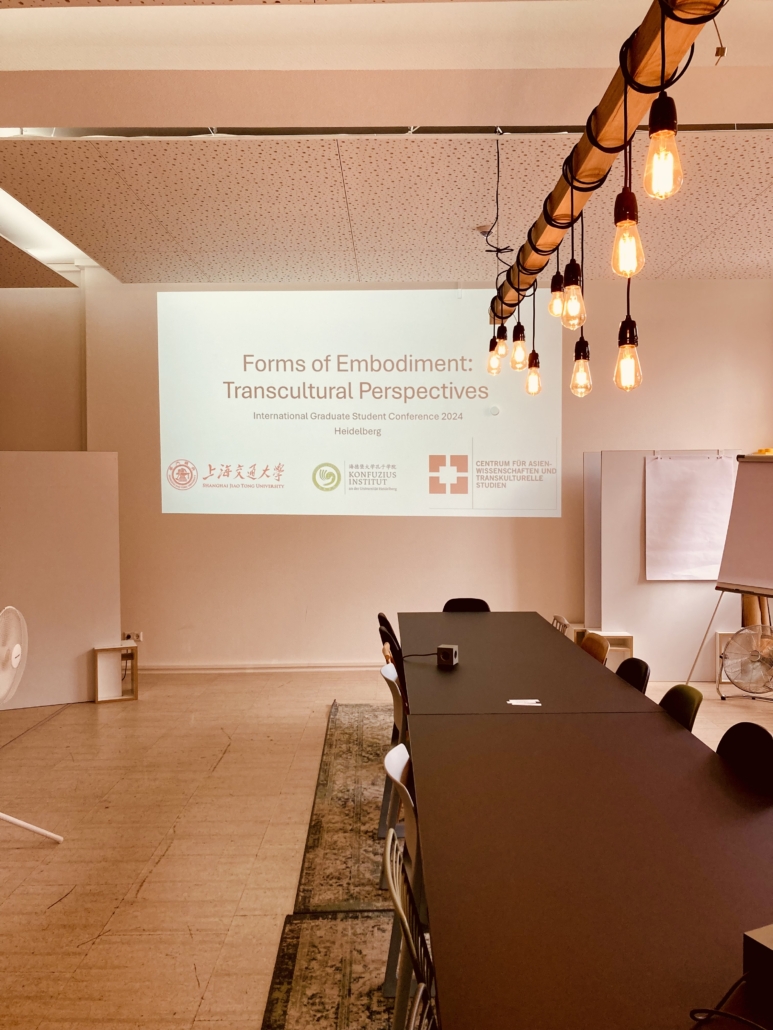
Sinophone Filmmaking: 1921 (2021 vers.) 137 mins.

Another retelling of founding a party, directed by Huang Jianxin whose aim it is here, to depict the spiritual world of Chinese Communists in the founding days of the party, their aspirations and their passions.

Lifeworlds on two sides of the Taiwan Straits—Cinematic narratives 

In a cooperation between the Taiwan Studies Program, the Worldmaking Project and the Center for Asian and Transcultural Studies (CATS), we are offering a series of films this semester from Taiwan, and the People’s Republic of China, depicting complex and conflicted sinophone realities and illustrating different ways of worldmaking, as

—prescribed in the form of “main melodies” by the powers that be, on one side of the Taiwan Straits: we unravel grandiose political narratives of revolution and revival, between dystopia and utopia.  

—described as reflections of the everyday, on the other side of the Taiwan Straits: we are given glimpses of “cotidian lives” among the petty, the poor, the marginalized, uncovering their function as heterotopia.  

As these films depict multiple “worlds within worlds”, from the point of view of those above, those below and those in between—from gangster boss, to ardent believer, from the young boy playing truant, to an old housewife, dressed to kill, they draw our attention to different types of subjectivities, vulnerabilities, desires and aspirations as effects of  everchanging biopolitics in the sinophone world. 

Film Schedule

Venue: CATS Auditorium

EatDrink, Man, Woman is a comedy-drama directed by Ang Lee 李安. The film uses food as a metaphor for family, tradition, and change, capturing unspoken tensions between generations.

Venue: CATS Auditorium

Directed by  Huang Jianxin et. al., this film shows how China, marked by political disunity embarks on a new rode lead by a handful of individuals, including Mao Zedong, Li Dazhao and Zhou Enlai, who, following the 1911 Revolution, envision a unified nation, and found a Party.

Venue: CATS Auditorium

Directed by Hsiao Ya-Chuan蕭雅全 and produced by  Hou Hsiao-hsien侯孝賢, this award-winning film is a family drama about an 11-year-old boy who befriends his landlord and learns from him how to survive in a rapidly changing world (and many things his own poor father would never be able to teach him).

Venue: CATS Auditorium 

Another retelling of founding a party, directed by Huang Jianxin whose aim it is here, to depict the spiritual world of Chinese Communists in the founding days of the party, their aspirations and their passions.

Venue: CATS Auditorium 

Cape No. 7  is a romantic comedy-drama directed by Wei Te-Sheng  魏德聖 and explores cross-cultural connections and life in a small town. Upon its 2008 release, the film became a cultural phenomenon, breaking domestic box-office records and sparking renewed interest in local cinema. 

Venue: CATS Auditorium 

Directed by Hsu Hsiao-ming 徐小明 and produced by Hou Hsiao-hsien 侯孝賢 the film is a landmark Taiwanese gangster film, it captures the restlessness of youth against the backdrop of Taiwan’s rapid modernization and the growing divide between rural and urban life.

Venue: CATS Auditorium 

Chairman Buddha is a documentary directed by Tang Louyi. It follows those who believe that Mao Zedong has been reincarnated as a Buddha.

Venue: CATS Auditorium

Mao Zedong died in 1976, but his impersonators are alive and well. This film documents the lives of two people who resemble Mao and assume Mao roles. Peng Tian is a villager from Mao’s home province of Hunan who walks into the Beijing Film Academy one day in full Mao dress to study film acting. Chen Yan is a housewife from Sichuan province, whose mother realized she looked like Mao. The documentary was directed by Zhang Bingjian.
Ostasien Aktuell: Coal, Renewables, and Grid Reform: China’s Energy Transition Challenges

China stands at the center of the global energy and climate landscape. It remains the world’s largest coal user while also leading in renewable deployment and equipment manufacturing. This coexistence reflects a system in which the rapid build-out of low-carbon capacity has not necessarily displaced fossil energy, revealing the uneven and segmented nature of China’s energy transition. The lecture reviews China’s current energy mix, emission trends, and the main objectives of its 2035 Nationally Determined Contribution (NDC). Using the evolution of electric-vehicle policy as a “warming-up” case to build the analytic frame, it applies three perspectives—techno-economic, societal-economic, and politicaleconomic—to examine how technological change interacts with institutional and social constraints.