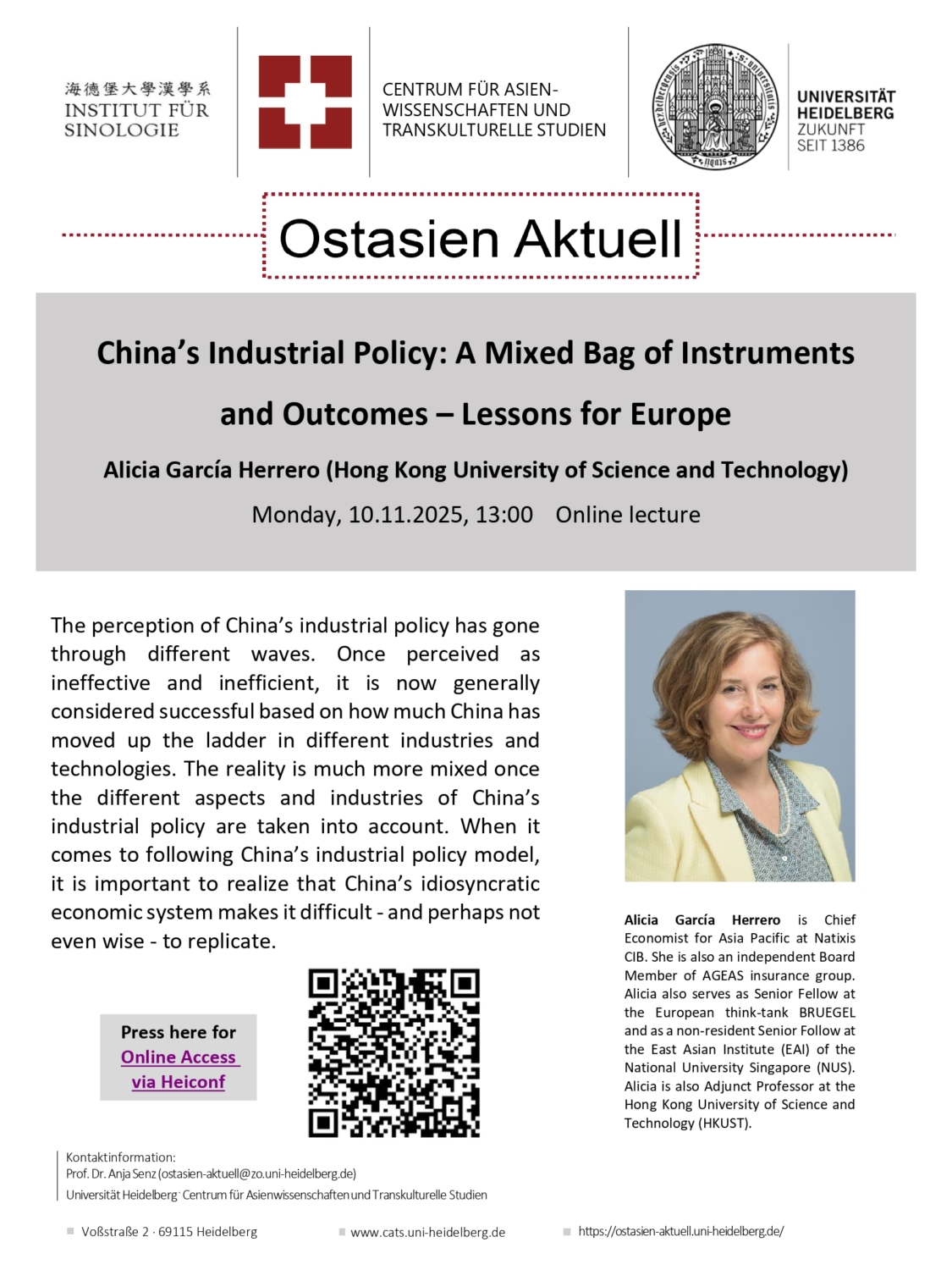
Sinophone Filmmaking: 老狐狸 (Old Fox, 2023) 112 mins.
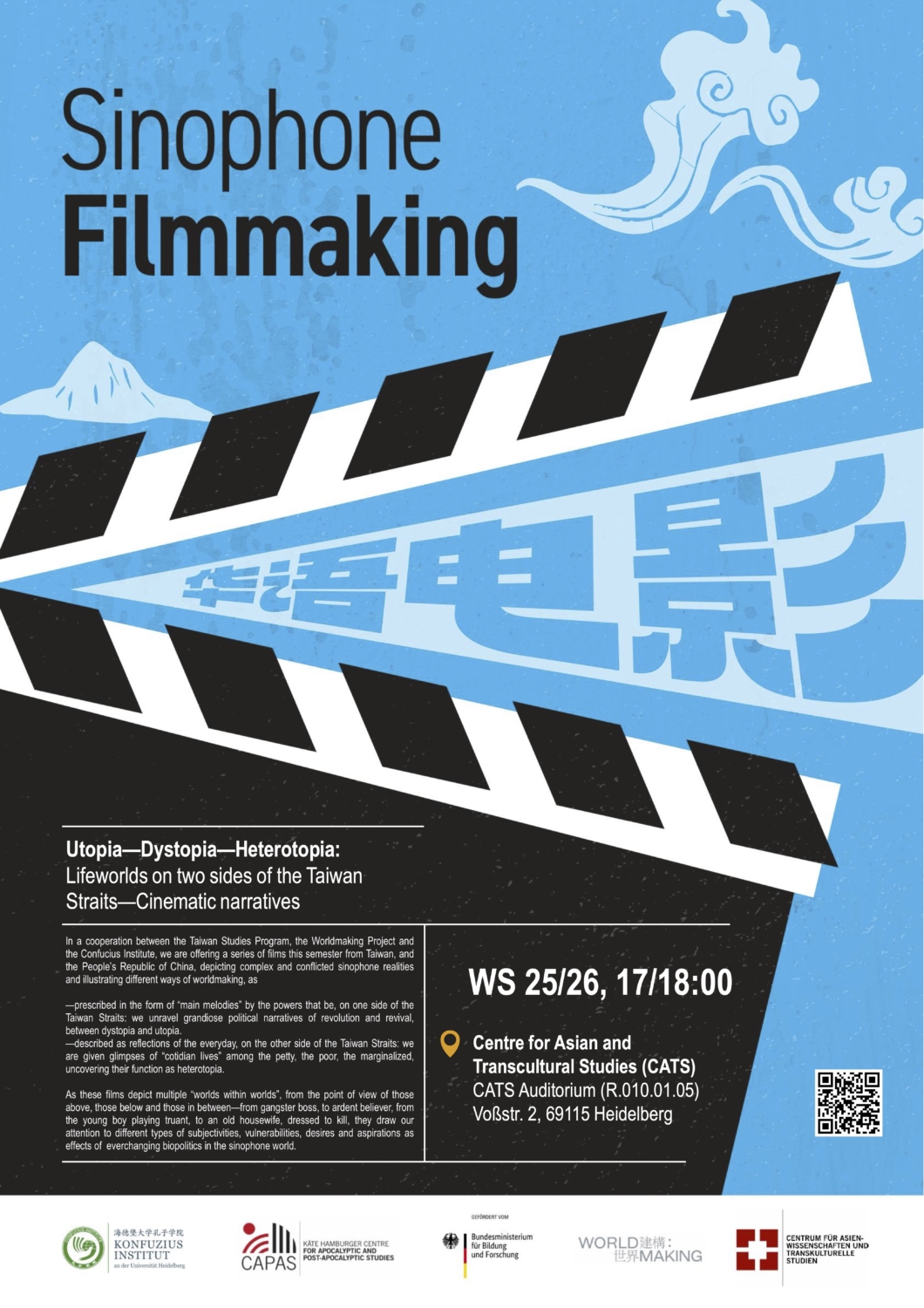
 

Directed by Hsiao Ya-Chuan蕭雅全 and produced by Hou Hsiao-hsien侯孝賢, this award-winning film is a family drama about an 11-year-old boy who befriends his landlord and learns from him how to survive in a rapidly changing world (and many things his own poor father would never be able to teach him).

Lifeworlds on two sides of the Taiwan Straits—Cinematic narratives 

In a cooperation between the Taiwan Studies Program, the Worldmaking Project and the Center for Asian and Transcultural Studies (CATS), we are offering a series of films this semester from Taiwan, and the People’s Republic of China, depicting complex and conflicted sinophone realities and illustrating different ways of worldmaking, as

—prescribed in the form of “main melodies” by the powers that be, on one side of the Taiwan Straits: we unravel grandiose political narratives of revolution and revival, between dystopia and utopia.  

—described as reflections of the everyday, on the other side of the Taiwan Straits: we are given glimpses of “cotidian lives” among the petty, the poor, the marginalized, uncovering their function as heterotopia.  

As these films depict multiple “worlds within worlds”, from the point of view of those above, those below and those in between—from gangster boss, to ardent believer, from the young boy playing truant, to an old housewife, dressed to kill, they draw our attention to different types of subjectivities, vulnerabilities, desires and aspirations as effects of  everchanging biopolitics in the sinophone world. 

Film Schedule

Venue: CATS Auditorium

EatDrink, Man, Woman is a comedy-drama directed by Ang Lee 李安. The film uses food as a metaphor for family, tradition, and change, capturing unspoken tensions between generations.

Venue: CATS Auditorium

Directed by  Huang Jianxin et. al., this film shows how China, marked by political disunity embarks on a new rode lead by a handful of individuals, including Mao Zedong, Li Dazhao and Zhou Enlai, who, following the 1911 Revolution, envision a unified nation, and found a Party.

Venue: CATS Auditorium

Directed by Hsiao Ya-Chuan蕭雅全 and produced by  Hou Hsiao-hsien侯孝賢, this award-winning film is a family drama about an 11-year-old boy who befriends his landlord and learns from him how to survive in a rapidly changing world (and many things his own poor father would never be able to teach him).

Venue: CATS Auditorium 

Another retelling of founding a party, directed by Huang Jianxin whose aim it is here, to depict the spiritual world of Chinese Communists in the founding days of the party, their aspirations and their passions.

Venue: CATS Auditorium 

Cape No. 7  is a romantic comedy-drama directed by Wei Te-Sheng  魏德聖 and explores cross-cultural connections and life in a small town. Upon its 2008 release, the film became a cultural phenomenon, breaking domestic box-office records and sparking renewed interest in local cinema. 

Venue: CATS Auditorium 

Directed by Hsu Hsiao-ming 徐小明 and produced by Hou Hsiao-hsien 侯孝賢 the film is a landmark Taiwanese gangster film, it captures the restlessness of youth against the backdrop of Taiwan’s rapid modernization and the growing divide between rural and urban life.

Venue: CATS Auditorium 

Chairman Buddha is a documentary directed by Tang Louyi. It follows those who believe that Mao Zedong has been reincarnated as a Buddha.

Venue: CATS Auditorium

Mao Zedong died in 1976, but his impersonators are alive and well. This film documents the lives of two people who resemble Mao and assume Mao roles. Peng Tian is a villager from Mao’s home province of Hunan who walks into the Beijing Film Academy one day in full Mao dress to study film acting. Chen Yan is a housewife from Sichuan province, whose mother realized she looked like Mao. The documentary was directed by Zhang Bingjian.

Ostasien Aktuell: Historical Evolution, Uncertainties, and Overlooked Dimensions of China’s Role in the Global Photovoltaic Sector

China’s pivotal role in the evolution of the global photovoltaic (PV) industry traces its ascent from a nascent exporter to an undisputed leader. Beginning in the early 2000s, China positioned itself as an export-oriented manufacturer, leveraging local government investments to build production capacity primarily for international markets. The 2010s marked
a surge in dominance, fueled by substantial government subsidies that enabled China to capture over 50% of global module production by the decade’s end, surpassingcompetitors through economies of scale and innovation in manufacturing processes. By 2021, China’s share had risen to approximately 70%, and its investments exceeded USD 50 billion in new PV supply chains, creating hundreds of thousands of jobs and outpacing Europe by a factor of ten. This trajectory culminated in current predominance, with China controlling over 80% of the global PV supply chain, including raw materials, wafers, cells, and modules. Data limitations, including proprietary data and incomplete supply chain disclosures, hinder accurate life cycle assessments (LCAs), leading to wide variability in carbon footprint estimates and underrepresentation of emissions from coaldependent processes. The intervention underscores the need for enhanced transparency, standardization, and reproducibility to address these gaps, particularly given China’s coal-intensive electricity grids and unaccounted factors like chemical consumption and land use effects.


IMAGINE: Die Freiheit der Anderen

SCHOLA HEIDELBERG

Leitung: Ekkehard Windrich

Das Projekt “Die Freiheit der Anderen” wurde vom KlangClub gemeinsam mit der AG GegenKlang des Elisabeth-von-Thadden Gymnasiums erarbeitet.

Gemeinsam mit unseren beiden Theaterpädagoginnen Magdalena Erhard und Nelly Sautter sowie dem Musiklehrer Johannes Balbach, erarbeiteten die Jugendlichen mit dem künstlerischen Leiter, Ekkehard Windrich, ein Projekt zu der großen Frage der sozialen Gerechtigkeit. Anlässlich des 500. Jubiläums des Bauernkrieges sowie dem Blick in die Bauernaufstände der chinesischen Bevölkerung, werden hier Vergangenheit und Gegenwart klanglich erlebbar gemacht.

In Kooperation mit: KlangForum Heidelberg

Revolutionäre Bauern – Chinesischer Bürgerkrieg und 500 Jahre deutscher Bauernkrieg

Im beginnenden 16. Jahrhundert geriet die Gesellschaftsordnung im deutschsprachigen Raum in eine Systemkrise. Immer mehr weltliche und kirchliche Feudalherren wollten versorgt werden durch immer höhere Steuern und Arbeitsverpflichtungen. Dies brachte die Bauern massenhaft in eine wirtschaftliche Abwärtsspirale, die oft in Verelendung und Leibeigenschaft endete.

Trotz aller Prunksucht der Mächtigen wurden die Herrschaftsverhältnisse lange als göttliche Ordnung allgemein akzeptiert. Intellektuell in Frage gestellt wurde die Feudalgesellschaft vor allem von innen heraus, etwa durch Hus, Savonarola, Luther, Erasmus oder Zwingli. Durch Luthers Bibel-Übersetzung und die protestantische Überzeugung, dass jeder einzelne Mensch sich direkt vor Gott rechtfertigen müsse, emanzipierten sich die Gläubigen der katholischen Kirche gegenüber. Damit delegitimierte Luther die gesamte Gesellschaftsordnung, mit der Folge erschreckender Gewaltexzesse, begangen von beiden Seiten.

Die Lage in China zu Beginn des 20. Jahrhunderts weist dazu viele Parallelen auf. Die Not der Landbevölkerung war ein bedrückender Beleg für die Krise der überkommenen Gesellschaftsverhältnisse unter dem Druck der Kolonisation. So stützte sich die KP im Bürgerkrieg weitgehend auf oft miserabel bewaffnete Bauern. Mao Zedong blieb bei dieser Strategie, als er sich innerhalb der KP durchsetzte. Der Blutzoll der Landbevölkerung war enorm.

Der Große Sprung nach vorn, der die Lage der Bauern strukturell verbessern sollte, endete nach anfänglichen Erfolgen in einer apokalyptischen Hungersnot. Wesentlich stärker im kollektiven Bewusstsein (zumindest des Westens) verankert ist demgegenüber die Kulturrevolution, obwohl sie bei aller grausamen Zerstörung traditioneller Bindungen viel weniger Todesopfer kostete. Doch zynisch gesprochen waren die Opfer diesmal „wertvoller“: städtisches Bürgertum und Intellektuelle, die oftmals „nur“ zu dem Leben gezwungen wurden, das für große Teile der chinesischen Bevölkerung lebenslanges Schicksal war und teilweise auch heute noch ist: Immer noch gehören Abermillionen von Chinesen der Landbevölkerung an.

Wir wollten in Die Freiheit der Anderen Fragen an die Gegenwart stellen. Ob das nun die Gegensätze zwischen Arm und Reich, Stadt und Land, Jung und Alt, akademischen und handwerklichen Milieus oder auch den Konflikt zwischen globalem Norden und Süden betraf, überließen wir den Jugendlichen vom KlangClub des KlangForum Heidelberg sowie den Jugendlichen der AG GegenKlang vom Elisabeth-von-Thadden Gymnasiums. Schließlich haben diejenigen, die davon am meisten betroffen sind, auch das feinste Sensorium für soziale Verwerfungen.

Das KlangForum ging mit diesem Musiktheater-Projekt einen mutigen Schritt hin zu einem engen und experimentellen Zusammenwirken von Profis und Jugendlichen:

Die Jugendlichen konzipierten alle relevanten Aspekte (Themensetzung, Libretto, Bühnenbild, musikalische Grundideen) selbst. Sie nahmen auch an den Aufführungen teil, zusammen mit der SCHOLA HEIDELBERG und ensemble aisthesis.

Die Bühnenhandlung war in ein „klingendes Bühnenbild“ eingebettet, bestehend aus elektroakustisch verstärkten und verfremdeten bäuerlichen Werkzeugen, die von allen bespielt wurden. Es galt dabei nicht nur, elektroakustische Effekte zu verstehen und für das Bühnengeschehen zu nutzen, sondern die Jugendlichen sangen auch selbst , unterstützt von der SCHOLA HEIDELBERG und ensemble aisthesis.

Auf dem Programm standen außerdem Werke aus der Zeit des deutschen Bauernkriegs (z.B. Josquin Desprez, Heinrich Isaac und Ludwig Senfl). Die Jugendlichen erlernten auch in Grundzügen den Umgang mit chinesischen (Volks-) Musikinstrumenten und chinesische Volkslieder. Da Volkslieder oft nicht nur einen kollektiven Arbeitsprozess beschreiben, sondern auch die Beteiligten an dieser Arbeit synchronisieren, boten sich reiche Anknüpfungspunkte für eine szenische Umsetzung.

Die Textgrundlage und der Handlungsablauf wurde von den Jugendlichen gemeinsam geschrieben. So ergab sich eine intensive und ergebnisoffene Auseinandersetzung mit Vergangenheit und gesellschaftlicher Gegenwart. Die Zusammenarbeit erfolgte dabei auf Augenhöhe zwischen den Generationen, womit der Lerneffekt für die Erwachsenen mindestens so groß war, wie für die Jugendlichen.

Sinophone Filmmaking: 建党伟业 (Beginning of a Great Revival / The Founding of a Party, 2011), 140 mins.

Directed by Huang Jianxin et. al., this film shows how China, marked by political disunity embarks on a new rode lead by a handful of individuals, including Mao Zedong, Li Dazhao and Zhou Enlai, who, following the 1911 Revolution, envision a unified nation, and found a Party.

Lifeworlds on two sides of the Taiwan Straits—Cinematic narratives 

In a cooperation between the Taiwan Studies Program, the Worldmaking Project and the Center for Asian and Transcultural Studies (CATS), we are offering a series of films this semester from Taiwan, and the People’s Republic of China, depicting complex and conflicted sinophone realities and illustrating different ways of worldmaking, as

—prescribed in the form of “main melodies” by the powers that be, on one side of the Taiwan Straits: we unravel grandiose political narratives of revolution and revival, between dystopia and utopia.  

—described as reflections of the everyday, on the other side of the Taiwan Straits: we are given glimpses of “cotidian lives” among the petty, the poor, the marginalized, uncovering their function as heterotopia.  

As these films depict multiple “worlds within worlds”, from the point of view of those above, those below and those in between—from gangster boss, to ardent believer, from the young boy playing truant, to an old housewife, dressed to kill, they draw our attention to different types of subjectivities, vulnerabilities, desires and aspirations as effects of  everchanging biopolitics in the sinophone world. 

Film Schedule

Venue: CATS Auditorium

EatDrink, Man, Woman is a comedy-drama directed by Ang Lee 李安. The film uses food as a metaphor for family, tradition, and change, capturing unspoken tensions between generations.

Venue: CATS Auditorium

Directed by  Huang Jianxin et. al., this film shows how China, marked by political disunity embarks on a new rode lead by a handful of individuals, including Mao Zedong, Li Dazhao and Zhou Enlai, who, following the 1911 Revolution, envision a unified nation, and found a Party.

Venue: CATS Auditorium

Directed by Hsiao Ya-Chuan蕭雅全 and produced by  Hou Hsiao-hsien侯孝賢, this award-winning film is a family drama about an 11-year-old boy who befriends his landlord and learns from him how to survive in a rapidly changing world (and many things his own poor father would never be able to teach him).

Venue: CATS Auditorium 

Another retelling of founding a party, directed by Huang Jianxin whose aim it is here, to depict the spiritual world of Chinese Communists in the founding days of the party, their aspirations and their passions.

Venue: CATS Auditorium 

Cape No. 7  is a romantic comedy-drama directed by Wei Te-Sheng  魏德聖 and explores cross-cultural connections and life in a small town. Upon its 2008 release, the film became a cultural phenomenon, breaking domestic box-office records and sparking renewed interest in local cinema. 

Venue: CATS Auditorium 

Directed by Hsu Hsiao-ming 徐小明 and produced by Hou Hsiao-hsien 侯孝賢 the film is a landmark Taiwanese gangster film, it captures the restlessness of youth against the backdrop of Taiwan’s rapid modernization and the growing divide between rural and urban life.

Venue: CATS Auditorium 

Chairman Buddha is a documentary directed by Tang Louyi. It follows those who believe that Mao Zedong has been reincarnated as a Buddha.

Venue: CATS Auditorium

Mao Zedong died in 1976, but his impersonators are alive and well. This film documents the lives of two people who resemble Mao and assume Mao roles. Peng Tian is a villager from Mao’s home province of Hunan who walks into the Beijing Film Academy one day in full Mao dress to study film acting. Chen Yan is a housewife from Sichuan province, whose mother realized she looked like Mao. The documentary was directed by Zhang Bingjian.
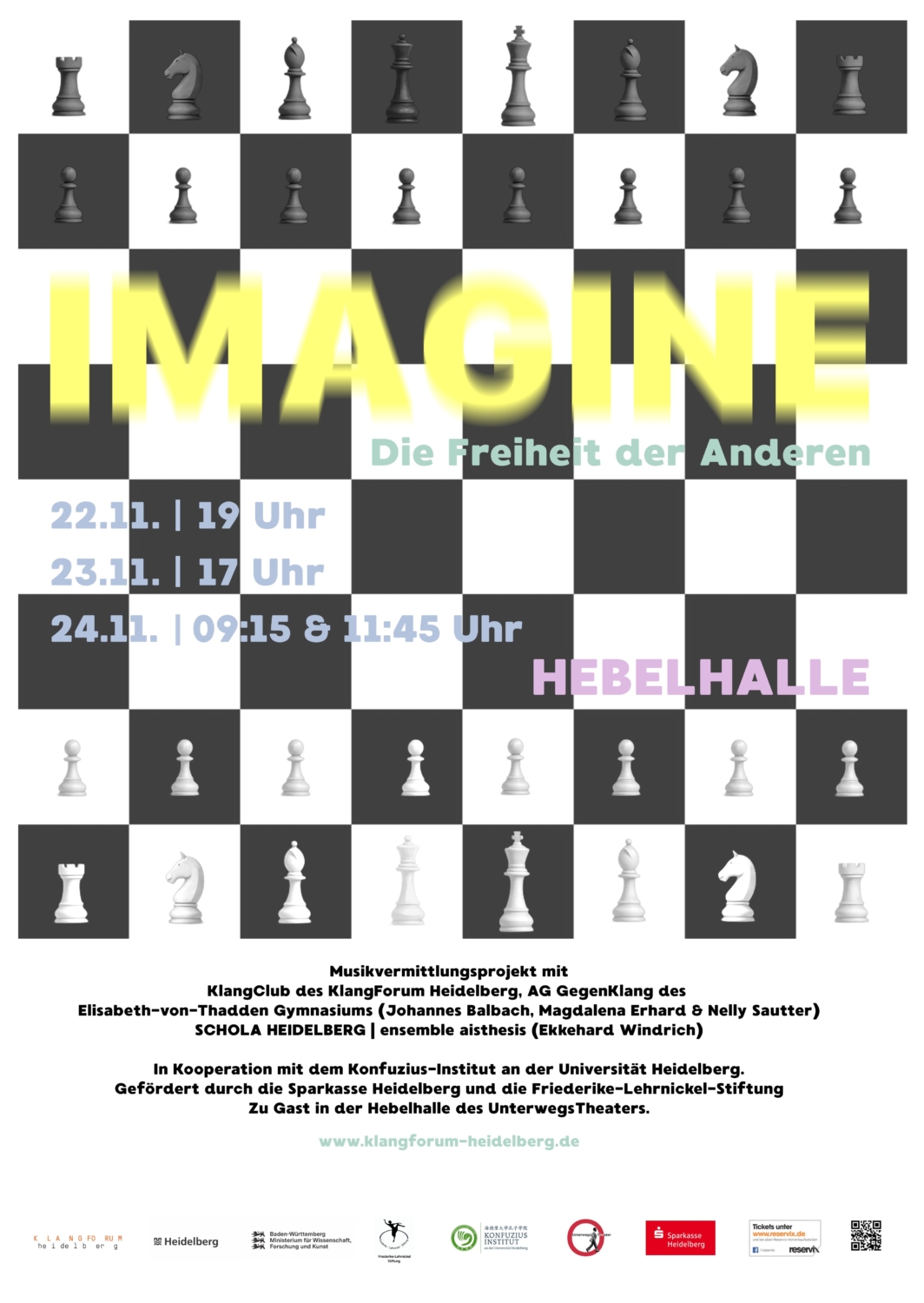
Sinophone Filmmaking: 飲食男女 (Eat, Drink, Man, Woman, 1994) , 123 mins.

Screening and discussion of “飲食男女 (Eat, Drink, Man, Woman, 1994)”​. Eat, Drink, Man, Woman is a comedy-drama directed by Ang Lee 李安. The film uses food as a metaphor for family, tradition, and change, capturing unspoken tensions between generations.

Lifeworlds on two sides of the Taiwan Straits—Cinematic narratives 

In a cooperation between the Taiwan Studies Program, the Worldmaking Project and the Center for Asian and Transcultural Studies (CATS), we are offering a series of films this semester from Taiwan, and the People’s Republic of China, depicting complex and conflicted sinophone realities and illustrating different ways of worldmaking, as

—prescribed in the form of “main melodies” by the powers that be, on one side of the Taiwan Straits: we unravel grandiose political narratives of revolution and revival, between dystopia and utopia.  

—described as reflections of the everyday, on the other side of the Taiwan Straits: we are given glimpses of “cotidian lives” among the petty, the poor, the marginalized, uncovering their function as heterotopia.  

As these films depict multiple “worlds within worlds”, from the point of view of those above, those below and those in between—from gangster boss, to ardent believer, from the young boy playing truant, to an old housewife, dressed to kill, they draw our attention to different types of subjectivities, vulnerabilities, desires and aspirations as effects of  everchanging biopolitics in the sinophone world. 

Film Schedule

Venue: CATS Auditorium

EatDrink, Man, Woman is a comedy-drama directed by Ang Lee 李安. The film uses food as a metaphor for family, tradition, and change, capturing unspoken tensions between generations.

Venue: CATS Auditorium

Directed by  Huang Jianxin et. al., this film shows how China, marked by political disunity embarks on a new rode lead by a handful of individuals, including Mao Zedong, Li Dazhao and Zhou Enlai, who, following the 1911 Revolution, envision a unified nation, and found a Party.

Venue: CATS Auditorium

Directed by Hsiao Ya-Chuan蕭雅全 and produced by  Hou Hsiao-hsien侯孝賢, this award-winning film is a family drama about an 11-year-old boy who befriends his landlord and learns from him how to survive in a rapidly changing world (and many things his own poor father would never be able to teach him).

Venue: CATS Auditorium 

Another retelling of founding a party, directed by Huang Jianxin whose aim it is here, to depict the spiritual world of Chinese Communists in the founding days of the party, their aspirations and their passions.

Venue: CATS Auditorium 

Cape No. 7  is a romantic comedy-drama directed by Wei Te-Sheng  魏德聖 and explores cross-cultural connections and life in a small town. Upon its 2008 release, the film became a cultural phenomenon, breaking domestic box-office records and sparking renewed interest in local cinema. 

Venue: CATS Auditorium 

Directed by Hsu Hsiao-ming 徐小明 and produced by Hou Hsiao-hsien 侯孝賢 the film is a landmark Taiwanese gangster film, it captures the restlessness of youth against the backdrop of Taiwan’s rapid modernization and the growing divide between rural and urban life.

Venue: CATS Auditorium 

Chairman Buddha is a documentary directed by Tang Louyi. It follows those who believe that Mao Zedong has been reincarnated as a Buddha.

Venue: CATS Auditorium

Mao Zedong died in 1976, but his impersonators are alive and well. This film documents the lives of two people who resemble Mao and assume Mao roles. Peng Tian is a villager from Mao’s home province of Hunan who walks into the Beijing Film Academy one day in full Mao dress to study film acting. Chen Yan is a housewife from Sichuan province, whose mother realized she looked like Mao. The documentary was directed by Zhang Bingjian.
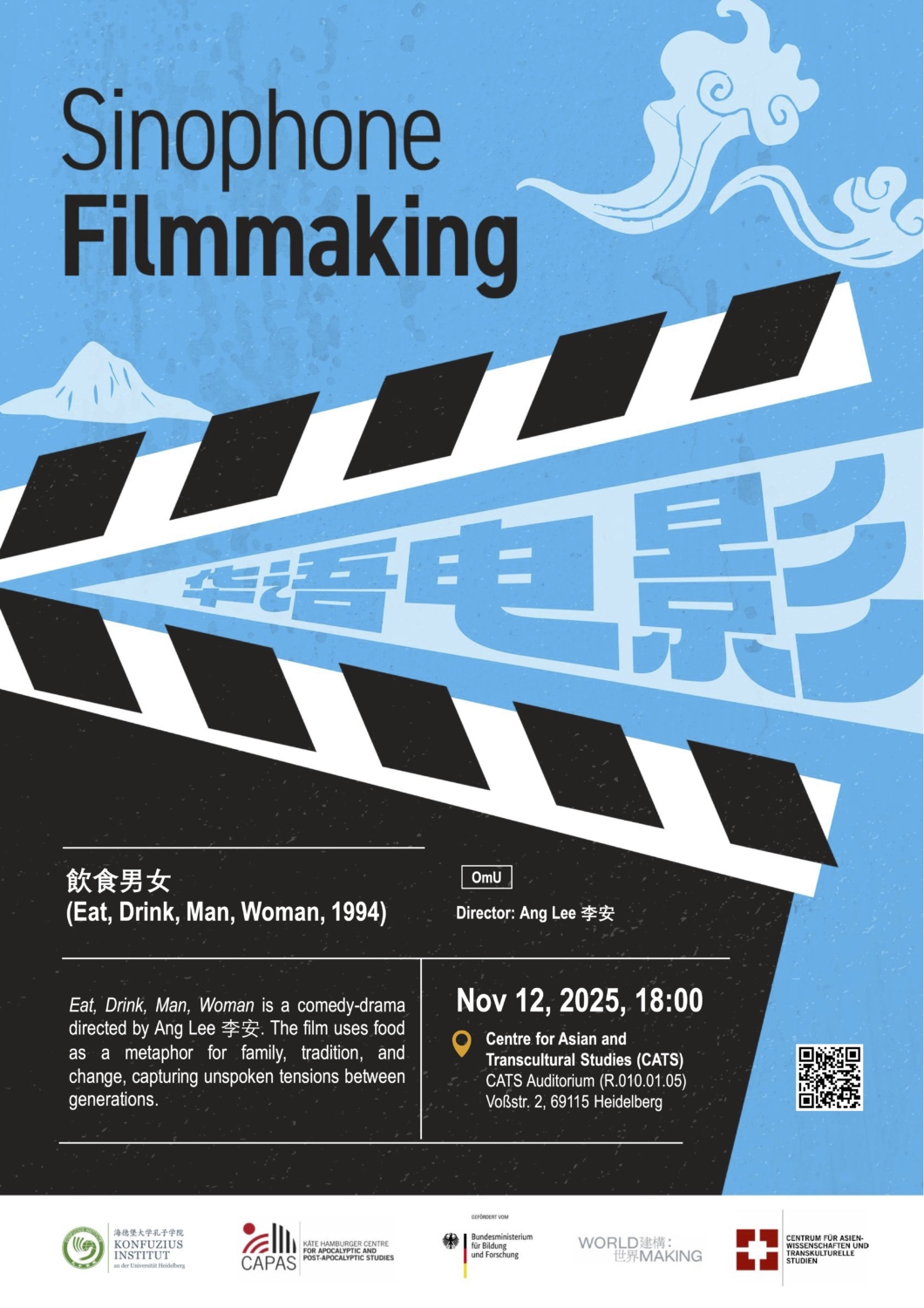
China’s Industrial Policy: A Mixed Bag of Instruments and Outcomes – Lessons for Europe


The perception of China’s industrial policy has gone through different waves. Once perceived as ineffective and inefficient, it is now generally considered successful based on how much China has moved up the ladder in different industries and technologies. The reality is much more mixed once the different aspects and industries of China’s industrial policy are taken into account. When it comes to following China’s industrial policy model, it is important to realize that China’s idiosyncratic economic system makes it difficult – and perhaps not even wise – to replicate