


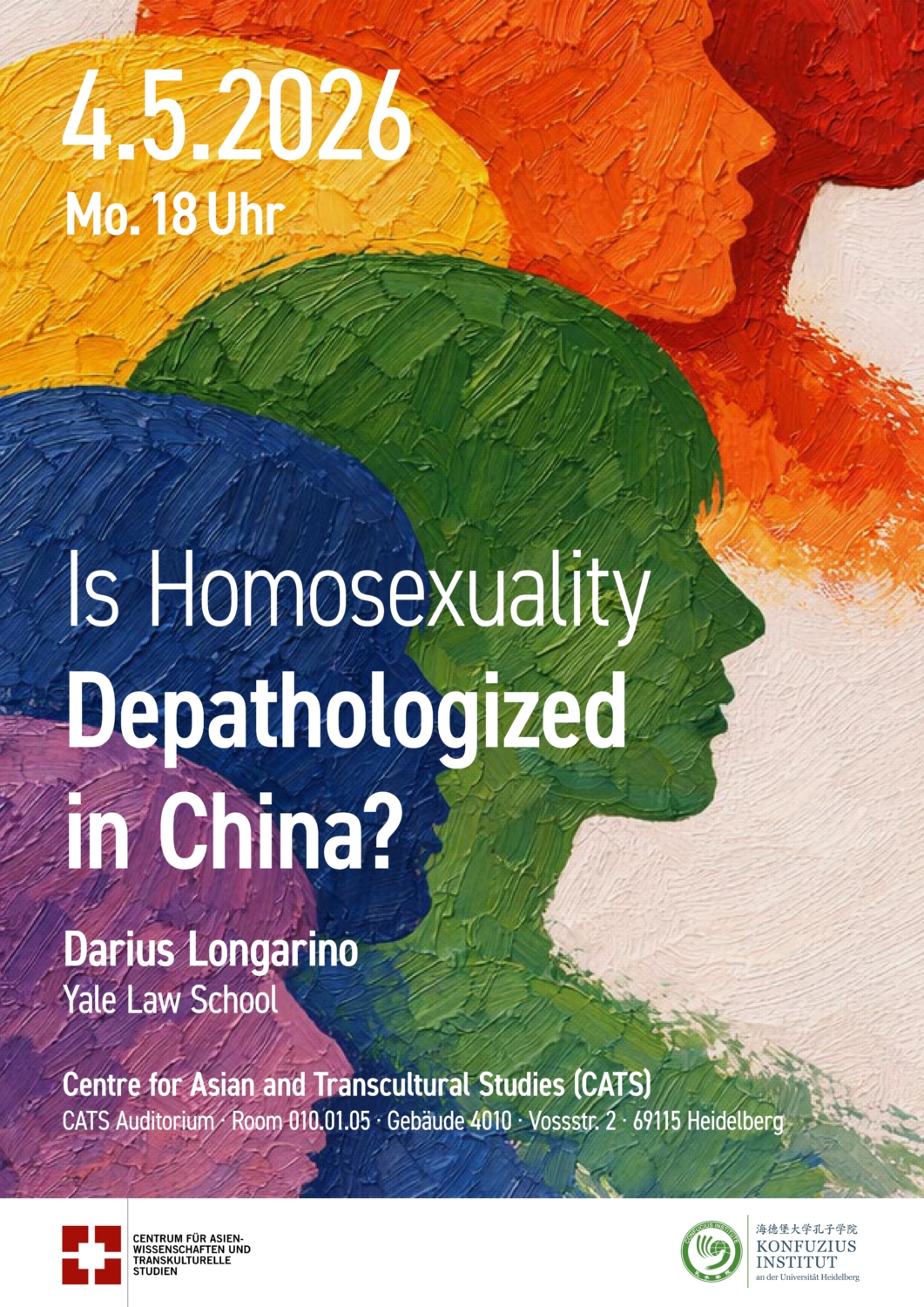
International media and scholarly discussions of gay rights in China often cite the 2001 “removal” of homosexuality from the Chinese Classification of MentalDisorders Version 3 (CCMD-3) as a major milestone. Chinese government officials, state media, and social media influencers have also held up this “removal” to showcase China’s progress on LGBTQ rights, and even to deny the existence of the discredited practice of “conversion therapy” in China. Yet, in the decades since 2001, many healthcare providers, educational textbooks, and official actors in China have treated homosexuality as a mental disorder. What explains this inconsistency?
As we mark the 25th anniversary of CCMD-3’s publication, this talk argues that CCMD-3 did not remove homosexuality as a diagnosis but merely reframed it in an equivocal—even self-contradictory—way. The result has been a decades-long confusion of interpretations among clinical practitioners, educators, officials, and society at large, with real-life impacts for LGBTQ people. Contrary to the popular “removal” narrative, the depathologization of homosexuality in China was not completed in 2001 but remains an ongoing process today. And it is a process that will only be completed once emerging new standards are fully adopted and implemented.
Darius Longarino is a Research Scholar in Law and Senior Fellow at Yale Law School’s Paul Tsai China Center, where he focuses on LGBTQ rights and gender equality in China.
In cooperation with the Center for Asian and Transcultural Studies (CATS).
